Pagination, idempotency, webhooks, and versioning—patterns that make developer integrations a joy.
A well-designed API is the difference between a platform developers love and one they tolerate. For communications platforms handling millions of messages daily, API design isn't just about functionality—it's about reliability, predictability, and developer experience. Great API design reduces support tickets, accelerates integrations, and builds developer loyalty.
RESTful Design Principles
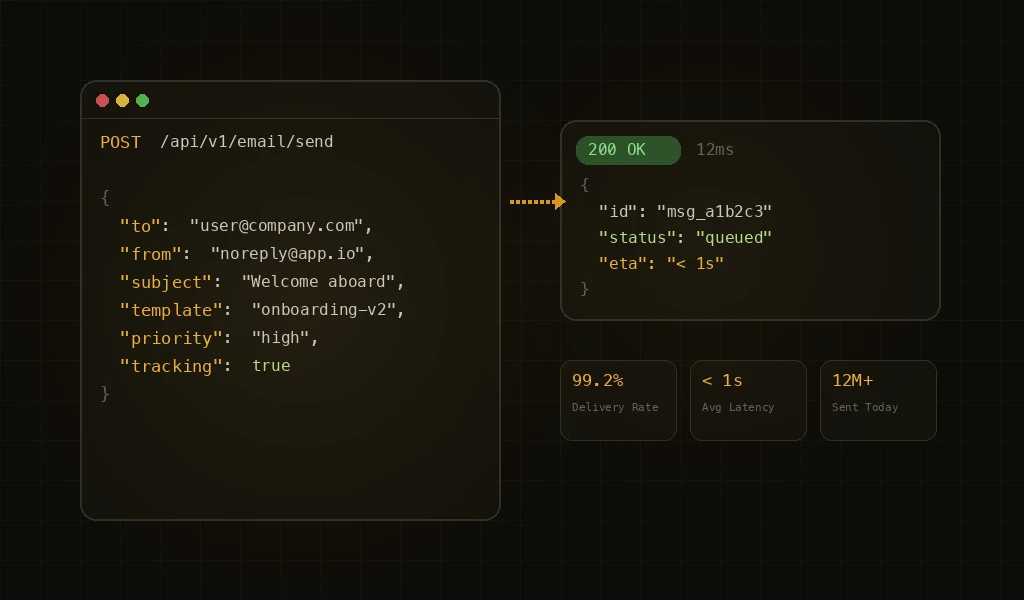
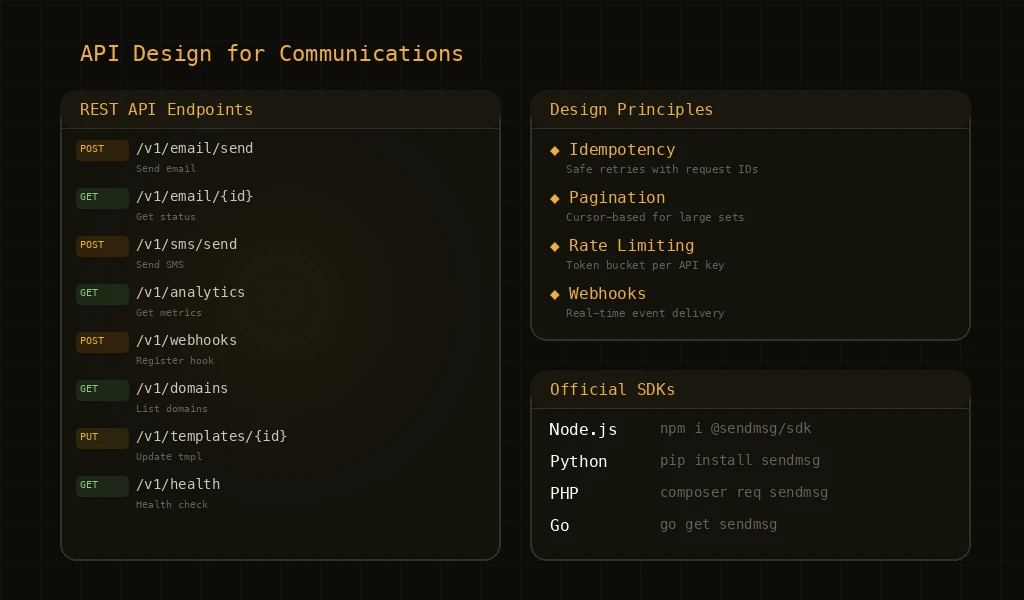
Follow REST conventions consistently. Use HTTP methods semantically (GET for retrieval, POST for creation, PUT/PATCH for updates, DELETE for removal). Structure URLs hierarchically to represent resource relationships. Return appropriate status codes and meaningful error messages. Consistency reduces cognitive load and makes your API intuitive.
Critical API Patterns
- Idempotency: Ensure repeated requests with the same idempotency key produce the same result, preventing duplicate messages
- Pagination: Implement cursor-based pagination for large datasets to ensure consistent results and optimal performance
- Rate Limiting: Protect infrastructure with intelligent rate limits and clear headers indicating remaining quota
- Webhooks: Enable instant event notifications with retry logic, signature verification, and event filtering
Versioning and Evolution
Plan for change from day one. Use URL versioning (v1, v2) for major breaking changes. Support multiple versions simultaneously with clear deprecation timelines. Communicate changes through changelog, migration guides, and advance notifications. Never break existing integrations without warning.
Developer Experience Checklist
- Comprehensive Documentation: Provide interactive API documentation with code examples in multiple languages, use case guides, and troubleshooting tips.
- Robust SDKs: Offer official SDKs for popular languages with consistent interfaces, automatic retries, and built-in best practices.
- Sandbox Environment: Give developers a safe space to test integrations with realistic data and behavior without affecting production.
Key Features
Developer-First
Intuitive design, thorough docs, and helpful SDKs make integration straightforward and enjoyable.
Enterprise Security
API key authentication, IP allowlisting, and webhook signature verification protect your integrations.
Further Reading
For more tutorials and deep dives, head back to the blog.